
Crypto and digital assets
Your accountant said they don’t do crypto.
Most won’t. The guidance is thin, the transaction volume is enormous, DeFi doesn’t fit neatly into anything, and a lot of practitioners decided years ago it wasn’t worth the exposure. So people with six figures of on-chain activity end up filing something approximate and hoping.
I hold a Certificate in Digital Assets and Blockchain from the New York Institute of Finance, I’m an Enrolled Agent licensed by the U.S. Treasury, and I do this work deliberately rather than reluctantly.
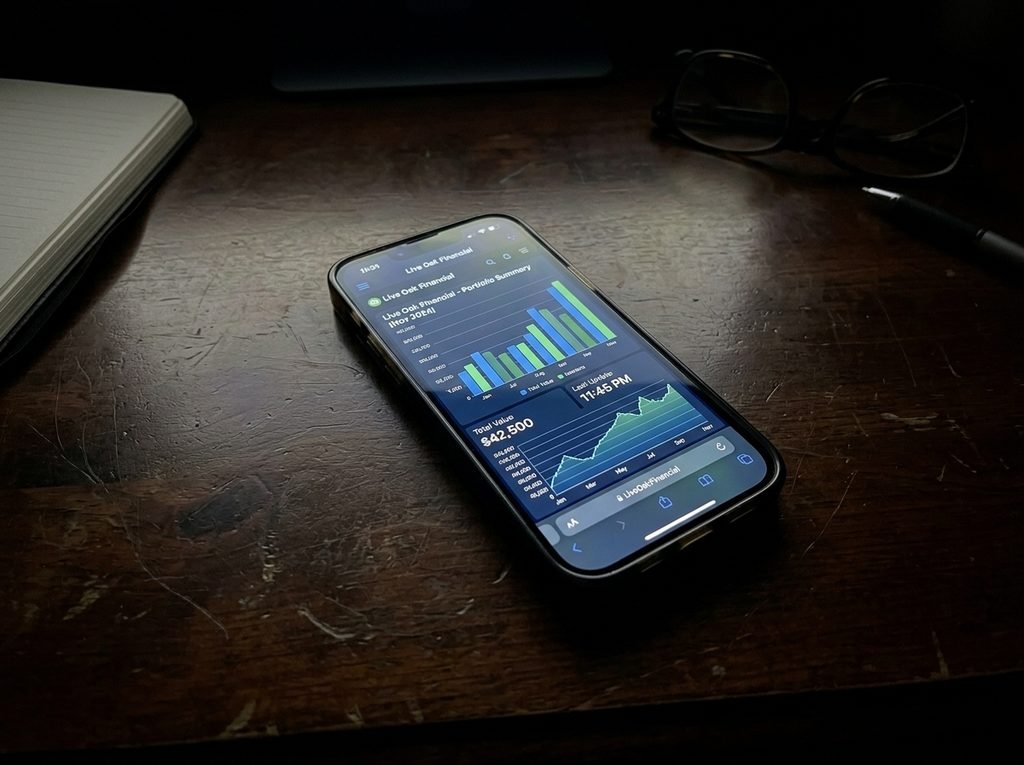
Why does my Form 1099-DA show a huge gain I didn’t make?
Because the first round of Form 1099-DA reports gross proceeds only. Cost basis is frequently blank or zero, which makes every sale look like pure profit. If you sold $80,000 of crypto that you had bought for $75,000, the form may show $80,000 and nothing else — and the IRS receives the same copy you did.
What this means right now
Exchanges now report your disposals directly to the IRS, and that data gets matched against your return. Unreported activity that was previously invisible is no longer invisible.
A mismatch between what the 1099-DA says and what your return says is exactly the pattern that generates an automated notice. The fix is not to ignore the form — it’s to reconcile it against your actual purchase history so you’re taxed on real gains rather than gross receipts.
And what’s coming
Basis reporting on covered assets phases in for later transaction years, so the forms will gradually get more complete. That doesn’t help with anything you bought before brokers started tracking, or with anything held in a self-custody wallet, or with anything acquired on-chain rather than on an exchange.
For most people with meaningful history, the basis problem is theirs to solve regardless of what the broker reports.
Cost basis reconstruction — the service most preparers won’t offer
This is the problem that stops everyone. Years of activity across exchanges that no longer exist, wallets you half remember, a bridge you used once, a DeFi protocol that never gave you a statement. No records, no starting point, and software that chokes on it.
It is more recoverable than you think, because the blockchain is a permanent record.
What I actually do
- Trace on-chain history from your wallet addresses — every transaction, every counterparty, every token, with timestamps
- Establish fair market value at each acquisition and disposal using historical price data
- Reconstruct exchange activity from API exports, CSV history, and account records, including exchanges that have since closed
- Identify and categorise transfers between your own wallets, which are not taxable and are routinely miscounted as sales
- Reconcile against any 1099-DA you received
- Build a defensible position where records genuinely no longer exist, and document the methodology used
The most common finding
People have been over-reporting. Self-transfers counted as disposals. Basis abandoned because it was inconvenient to find. Gas fees ignored when they should have adjusted basis or proceeds. Losses never claimed at all.
The second most common finding is the opposite — income that was never reported because nobody knew it was income. Staking rewards, airdrops, referral bonuses.
Both are fixable, and both are better found by me than by the IRS.
Quoted as its own project once I’ve seen the scale — number of wallets, number of chains, rough transaction count, and how many years. You get a fixed price before anything starts.
Which crypto transactions are taxable?
More than most people realise. The IRS treats digital assets as property, so disposing of them is a taxable event even when no dollars were involved — and several ways of receiving crypto are ordinary income at the moment you receive it.
Capital gain or loss
- Selling crypto for dollars
- Trading one token for another — the one people miss most often. A swap is a disposal, even though no cash moved
- Spending crypto on goods or services
- Selling an NFT
- Converting to or from a stablecoin
Ordinary income when received
- Staking rewards — income at fair market value when you gain control of them, not when you sell
- Airdrops — income at value on receipt, including ones you never asked for
- Hard forks where you receive new tokens
- Mining — income, and possibly self-employment income
- Lending and yield rewards
- Referral and sign-up bonuses
- Being paid in crypto for work
Not taxable
- Buying with dollars and holding
- Moving between your own wallets — but this is constantly miscounted as a sale by software, which inflates your reported gains
- Gifting, below the annual exclusion
- Donating directly to a qualified charity, which can be considerably better than selling first
You still answer the digital asset question on page one of Form 1040 truthfully either way.
The staking and airdrop point catches almost everyone. You owe tax on the value when the reward hit your wallet, even if you never sold it, and even if it has since fallen to nothing. That value also becomes your basis, so a later sale at a loss is deductible — but only if somebody recorded the income in the first place.
The wallet-by-wallet rule changed everything
If your preparer is still pooling all your holdings into one universal basis calculation, they are using a method that is no longer permitted.
Revenue Procedure 2024-28 ended universal cost basis tracking and required basis to be tracked separately for each wallet and each exchange account, effective 1 January 2025. It also created a one-time safe harbour allowing taxpayers to allocate previously unattached basis across their specific wallets.
That window has closed. Taxpayers who didn’t take the safe harbour are generally locked into whatever allocation existed at the start of 2025 and can’t retroactively move basis between wallets.
What that means practically: your basis position now has to be defensible wallet by wallet — how each unit was acquired, held, transferred and disposed of. Guidance on what counts as a reasonable allocation remains thin, and professional bodies have asked the IRS for more of it. This is exactly the kind of area where having someone who follows it closely is worth more than having someone with a longer list of credentials.
Separately, FIFO is the default identification method, but specific identification — including highest-in-first-out — is permitted with adequate records, and choosing well can meaningfully change your tax.
How is DeFi taxed?
Honestly? In several places the answer isn’t settled, and anyone who tells you otherwise is overselling. The IRS has issued very little guidance specific to decentralised finance, so a competent return takes a defensible position and documents the reasoning rather than pretending to certainty.
Reasonably clear. Yield and rewards are ordinary income when you gain control of them. Token swaps through a decentralised exchange are disposals just as they would be anywhere else. Selling an LP position is a disposal.
Genuinely unsettled. Whether depositing into a liquidity pool is itself a disposal. Whether wrapping a token is a taxable exchange. Whether bridging between chains triggers gain. How to treat rebasing tokens, liquid staking derivatives, and receipt tokens generally.
What I do is tell you where the line is, take a position that can be defended if questioned, and write down why. Then if it ever is questioned, I’m an Enrolled Agent and I can represent you before the IRS myself — which matters more in an area this grey than in almost any other part of tax.
Also handled: NFTs including the possibility of collectibles treatment, gas fees and where they belong, worthless and rug-pulled tokens, exchange bankruptcies and frozen accounts, mining as a business, and foreign exchange account reporting.
The one advantage crypto still has
The wash sale rule in Section 1091 applies to stocks and securities. Because digital assets are treated as property rather than securities, the rule does not currently apply to them the same way.
Sell a stock at a loss and buy it back within thirty days, and the loss is disallowed. The equivalent move in crypto has generally not carried the same restriction — which makes loss harvesting a genuinely more flexible tool here than anywhere else in your portfolio.
Two cautions. Legislation to extend the wash sale rule to digital assets has been proposed repeatedly and could pass, so this is a position to confirm rather than assume. And the economic substance doctrine still exists — a transaction with no purpose beyond generating a loss is not automatically safe just because a specific rule doesn’t name it.
If you’re sitting on unrealised crypto losses and nobody has raised this with you, that’s a conversation worth having before the year closes rather than in April.
Questions people ask
Do I owe tax if I only traded one crypto for another?
Yes. Because the IRS treats digital assets as property, swapping one token for another is a disposal of the first asset and an acquisition of the second. You have a capital gain or loss measured against the basis of what you gave up, even though no dollars were involved and nothing was withdrawn.
This is the single most commonly missed taxable event in crypto, and it’s why active traders with no cash withdrawals can still owe substantial tax.
Are staking rewards taxable before I sell them?
Yes. Staking rewards are ordinary income at their fair market value at the moment you gain dominion and control over them — meaning when they become yours to move or sell, not when you eventually dispose of them.
That value becomes your cost basis in the tokens. So if they later fall in value and you sell, you have a capital loss — but only if the income was recorded at receipt in the first place. People who skipped the income step also lose the loss.
Do I have to pay tax on an airdrop I never asked for?
Generally yes, if you had the ability to transfer, sell or otherwise dispose of the tokens. Airdropped tokens are ordinary income at fair market value when you gain dominion and control over them, regardless of whether you sought them out.
Where tokens arrive in a wallet you cannot access, or have no established market value at the time, the analysis is different and worth looking at rather than assuming either way.
I have no records. Can my cost basis be reconstructed?
Usually, yes. Blockchain transactions are permanent and public, so on-chain activity can be traced from your wallet addresses — every transfer, swap and interaction, with timestamps — and valued using historical price data.
Centralised exchange activity is harder if the exchange has closed, but API exports, downloaded CSVs, email confirmations and bank records usually get most of the way there. Where genuine gaps remain, a documented reasonable methodology is the accepted approach — and it is considerably better than reporting zero basis.
Does the wash sale rule apply to cryptocurrency?
Under current law the wash sale rule in Section 1091 applies to stocks and securities, and digital assets are treated as property rather than securities — so the rule has not applied to crypto in the same way. This makes loss harvesting more flexible with crypto than with stocks.
Legislation to change this has been proposed repeatedly and could pass at any time, so it should be confirmed for the year in question rather than assumed. The economic substance doctrine also continues to apply independently.
Can the IRS actually see my crypto?
Increasingly, yes. Exchanges now report disposals to the IRS on Form 1099-DA, and that data is matched against filed returns. The IRS has also used summonses to obtain customer records from major exchanges, and blockchain analytics tools trace on-chain activity between addresses.
The practical position is that activity on centralised exchanges is visible, and on-chain activity is traceable once an address is linked to you. Filing accurately is a far better strategy than hoping.
I didn’t report crypto in previous years. What should I do?
Amend, generally. A return can usually be amended within three years of filing, and correcting it voluntarily is treated far more favourably than being found through 1099-DA matching or an examination.
Very often the amended return shows less tax owed rather than more, because unreported losses and unclaimed basis turn out to outweigh unreported gains. The first step is reconstruction — you cannot decide what to do until you know what actually happened.
Can I just use crypto tax software?
For a straightforward history on one or two exchanges, often yes, and I’d tell you so. Software handles clean centralised-exchange activity well.
Where it struggles is self-custody wallets, DeFi protocols, bridges, wrapped tokens, NFTs, and transfers between your own wallets — which it frequently misreads as sales, inflating your gains. It also cannot decide unsettled questions for you; it just applies a setting. If your export looks wrong, it probably is.
Tell me what you’re dealing with
Roughly how many wallets and exchanges, which chains, how many years, and whether it’s mostly trading or mostly DeFi. That’s enough for me to tell you what this looks like.
If the honest answer is “I have no idea,” say that. It’s a normal answer and it doesn’t change anything.
Never send wallet addresses, seed phrases, private keys or exchange logins through this form. Nothing here needs them, and nobody legitimate will ever ask you for a seed phrase. Once we’re working together you’ll get a secure portal, and read-only public addresses are all I need.
What happens next
A reply in a day
From me. If your situation is simple enough that software will handle it, I’ll tell you that instead of selling you something.
A look at the scale
Wallets, chains, years, rough transaction count. Reconstruction is priced by how much there is to reconstruct, so this is how the quote gets built.
A fixed price
In writing before anything begins. Reconstruction, current-year returns and amended prior years are quoted separately so you can take them in stages.
Then you’re current
And you have a documented basis position going forward, wallet by wallet, so next year is straightforward instead of another archaeology project.
Michael Jones, EA & CFP® — Enrolled Agent licensed by the U.S. Department of the Treasury, and holder of a Certificate in Digital Assets and Blockchain from the New York Institute of Finance. This page is general information, not advice about your situation, and it is not investment advice. Digital asset tax rules are changing quickly; confirm anything here before relying on it.