
The IRS sent you a letter. Here’s what actually happens next.
If you’re reading this at eleven at night with the envelope open in front of you, start here: almost nothing about this moves quickly. You have more time than the letter makes it feel like you have, and the situation is very likely more ordinary than it looks.
This page explains what these letters are, what the deadlines really mean, and what happens if you do nothing. No sales pitch. If you can handle it yourself after reading it, that’s a good outcome.
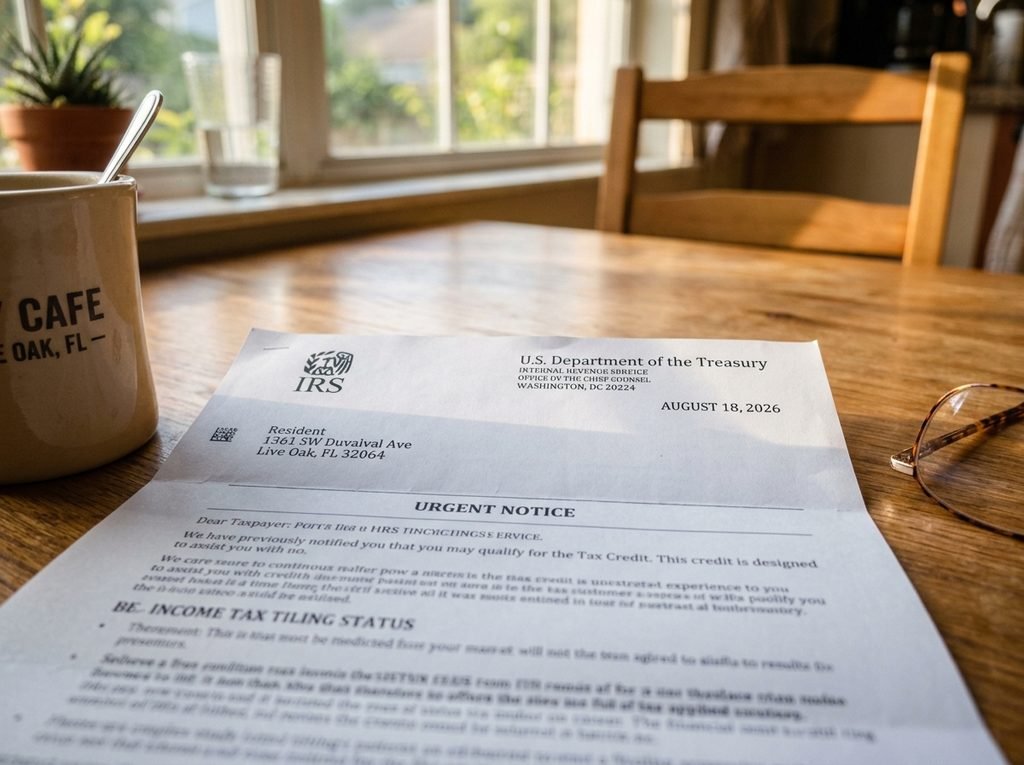
Four things worth knowing before you read it again
A computer sent it, not a person
The great majority of IRS correspondence comes from automated systems matching what was reported about you against what you filed. Nobody read your return and decided you looked suspicious. A mismatch was flagged, a letter was generated, it was mailed. That’s usually the whole story.
A proposed change is not a bill
Several of the most common letters propose an adjustment and invite you to agree or disagree. The number on the page is what the IRS thinks you might owe if their assumption is right. It is frequently wrong — usually because they know what was sold but not what you paid for it.
Even real audits happen by mail
Most examinations are correspondence audits: the IRS asks for documentation on one or two specific items and you send it. Nobody comes to your house. Nobody sits across a table from you. For most people an audit means a few letters and some receipts.
Nothing gets seized because you took a week
Collection action requires a specific sequence of notices, each with its own waiting period, and the final one gives you the right to a hearing before anything happens. The system is slow and procedural. Taking a few days to think costs you nothing.
Find your notice number
It’s printed in the upper right corner of the first page — a short code like CP2000 or LT11. That code tells you exactly what kind of letter this is.
Not listed? Send me the number and I’ll tell you what it is.
Proposing a change
- CP2000 — the most common of all. Income reported to the IRS doesn’t match your return. Not an audit, frequently overstated. 30 days to respond.
- CP2501 — an earlier, softer version. No proposed tax figure yet.
- Letter 525 / 692 — the examination report after an audit. Generally 30 days.
- Letter 3219 — Notice of Deficiency, the “90-day letter.” 90 days to petition the Tax Court, and it cannot be extended for any reason.
A balance owed
- CP14 — the first notice that you owe. The beginning of the process, not the end.
- CP501, CP503 — reminders. Firmer wording, same balance, no new action.
- CP504 — intent to levy your state refund. Sounds severe; not yet a levy on wages or accounts.
- CP71C — annual reminder of a balance that’s been sitting there. Often arrives years later.
Clocks you shouldn’t miss
- LT11 / Letter 1058 — Final Notice of Intent to Levy. 30 days to request a hearing, which generally stops collection while pending. The most important deadline in collections.
- CP90 — the same thing under a different number.
- Letter 3172 — a federal tax lien has been filed. 30 days to request a hearing. Matters if you’re selling or refinancing.
What actually happens if you ignore it
Nothing dramatic, at first. And then, slowly, something.
If you don’t respond to a proposed change, the IRS eventually assesses it as though they were right. The number becomes real, and from that point you’re arguing against an assessment rather than a proposal — harder, though not impossible.
If you don’t respond to a balance owed, interest and penalties accrue, the notices get firmer, and after several months the collection sequence begins.
The genuinely important thing to avoid is missing a deadline that closes a door: the 90 days on a Notice of Deficiency, or the 30 days on a final notice of intent to levy. Those two windows give you rights you cannot get back.
Everything else is recoverable. People come to me six years behind and we sort it out. Slower and more expensive than dealing with it early — but not the end of anything.
Do you actually need me?
Often, no
A CP2000 about a single 1099 you forgot, where the IRS is right, needs a signed response and a payment. You can do that yourself in an evening and I’d rather you did.
Same for a first balance notice you can simply pay, or a reminder about something you already handled.
Worth having someone when
- The amount is large enough to matter
- The IRS’s figure looks wrong and you need to prove why
- There are unfiled years behind the problem
- A business or cash income is involved
- You’re being examined rather than matched
- You’ve been avoiding it long enough that you’d rather hand it over
That last one is a perfectly good reason. Avoidance is what turns a small problem into a large one, and paying someone to make it stop being your problem is a rational purchase.
How I work on these, and what it costs
In two phases, so you’re never buying something before you know what it is.
Phase one
Investigation — $999.00
I file an authorization with the IRS, pull your complete account transcripts for every year involved, and find out what is actually there — what’s assessed, what’s unfiled, what the balances really are, where you sit in the collection sequence, and how much time is left on each clock.
You get a written memo: what the IRS has, what the letter means, what your options are, and what each one would cost. Usually within a week.
That’s a complete piece of work. Take the memo and handle it yourself, take it to someone else, or do nothing. No obligation to continue and no pressure to.
Phase two
Quoted from facts, not guesses
Once we both know what the situation is, I quote a fixed fee for handling it. Responding to the notice, filing the missing years, requesting abatement of penalties, arranging a payment plan, representing you through an examination — whatever the memo said was needed.
You decide with a real number in front of you.
Nobody quotes a resolution before knowing what they’re resolving, and anyone who does is guessing at your expense.
What I won’t tell you
Settle for pennies on the dollar. The IRS has a secret programme. Call now, our specialists are standing by.
Most people who respond to those advertisements don’t qualify for what’s being advertised, and the firms running them know it before the phone is answered. The programme they’re describing is real, but it has strict financial requirements and a great many applications are rejected — after the fee has been collected.
I won’t promise you an outcome before I’ve seen your transcripts. Not on the phone, not in an email, not to close a sale. I don’t know what your situation is until I’ve looked, and neither does anyone else.
What I can tell you is that the unglamorous options are usually the useful ones. Penalties abated because you have a clean history. An instalment agreement you can actually afford. A hold on collection while your finances recover. A response showing the IRS their number was wrong.
Those work, they work often, and nobody makes a radio advertisement about them.
Tell me about the letter
Tell me the notice number and roughly what it says. I’ll tell you what it means and whether it needs anyone — and if it doesn’t, I’ll say so.
Please don’t attach the letter or include your Social Security number here. A notice number and a sentence is enough to start, and we’ll move to a secure portal once we’re talking.
What happens next
One business day
I reply myself. Not an intake coordinator, not an automated sequence.
Twenty minutes on the phone
What the notice says, which years are involved, whether anything is unfiled behind it. You’ll get a straight answer about how serious this is.
A decision with a number
If it needs the investigation phase, I’ll say so and quote the $750. If it doesn’t, I’ll tell you what to do yourself.
Then it’s mine
Once I’m authorized, correspondence comes to me and calls come to me. You go back to your week.
Michael Jones, EA & CFP® — Enrolled Agent, licensed by the U.S. Department of the Treasury to represent taxpayers before the IRS in all fifty states. This page is general information, not advice about your specific situation.